01
01 / PLAN
Define the behavior
The user creates a habit with cadence, target, and context.
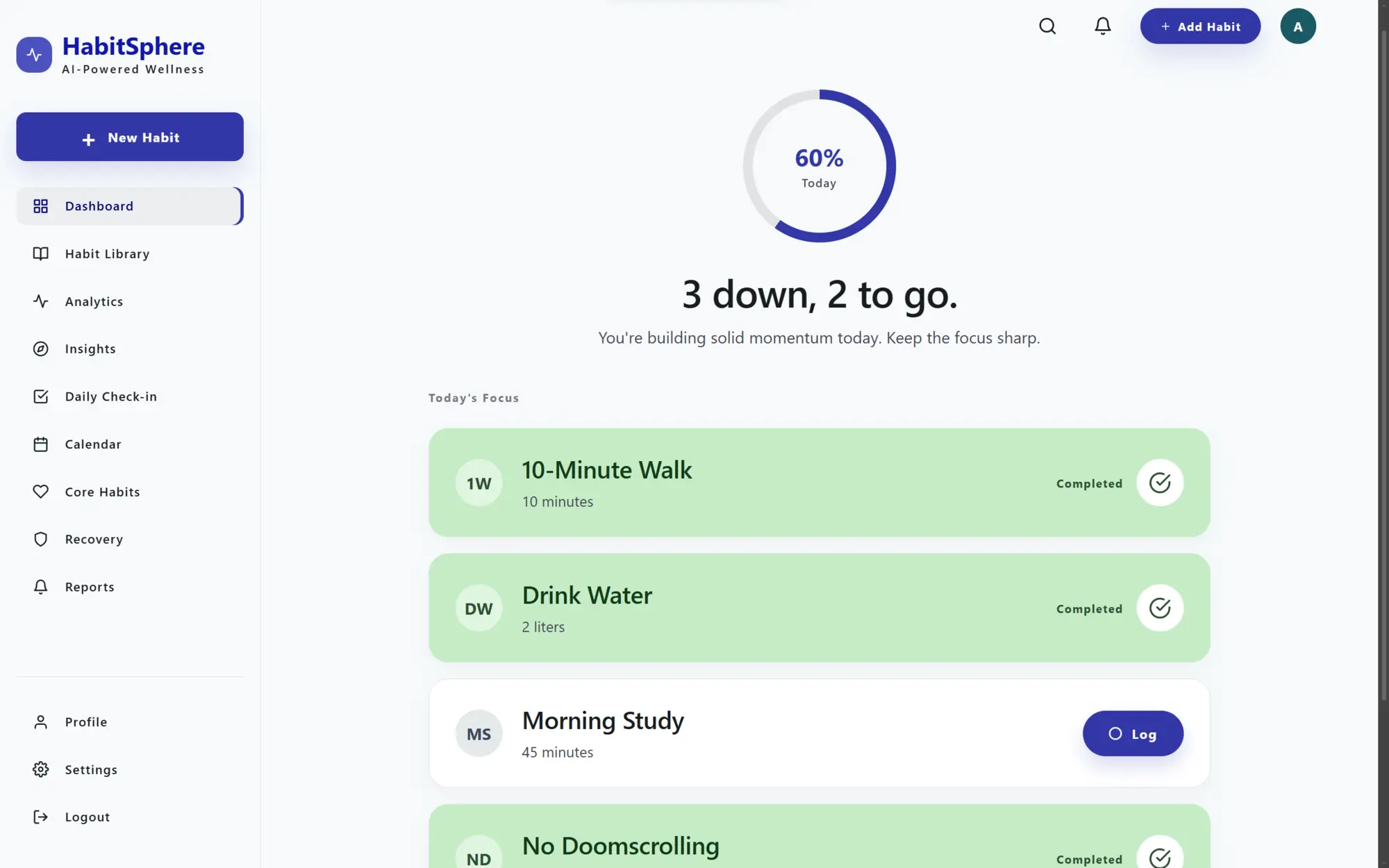
Habit tracking becomes useful when the product explains patterns—not when it only celebrates streaks.
One complete interface state at a time. Each screen documents the task, the system response, and what the user can do next.
The user creates a habit with cadence, target, and context.
Simple check-ins build the behavioral history without making the dashboard heavy.
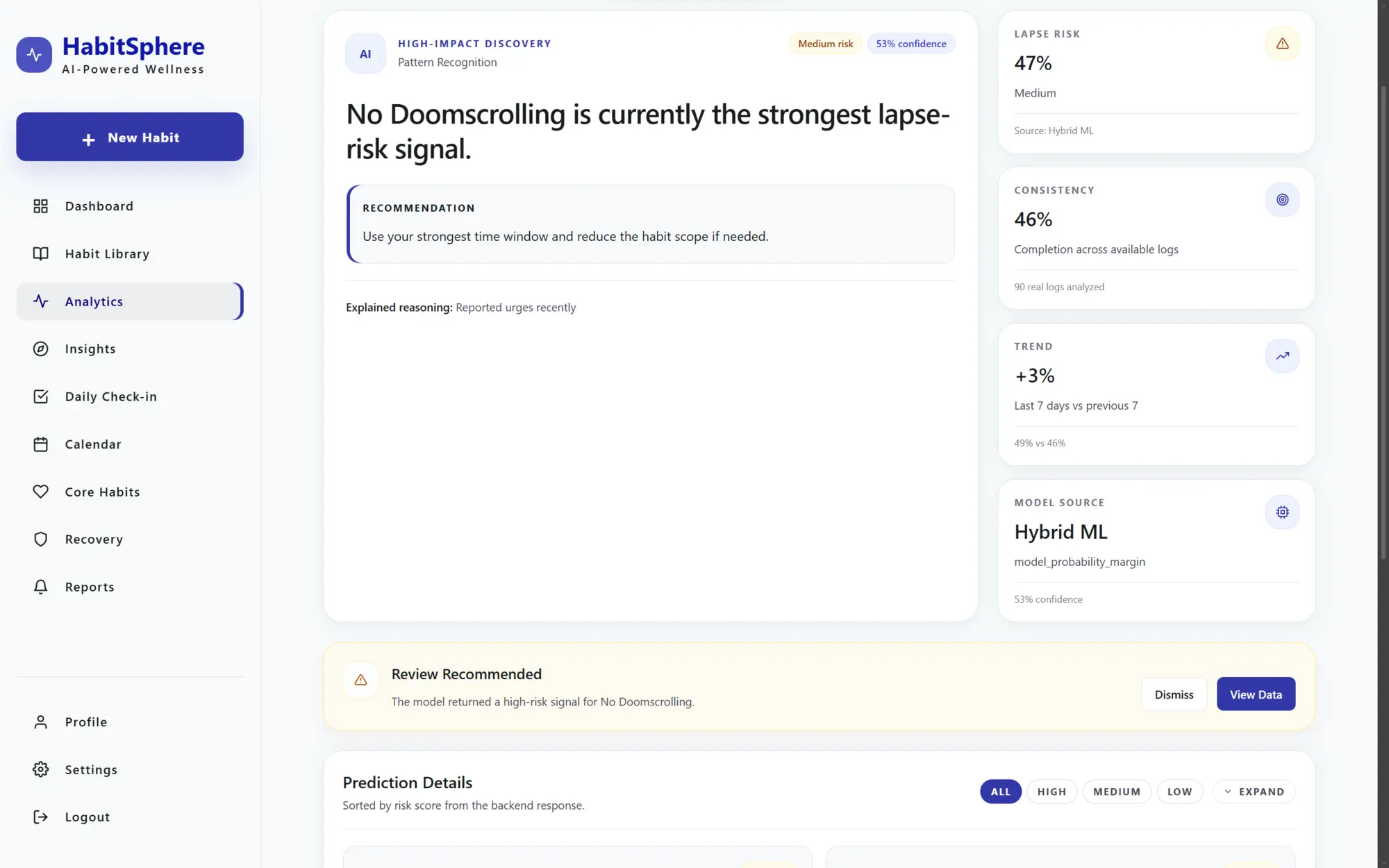
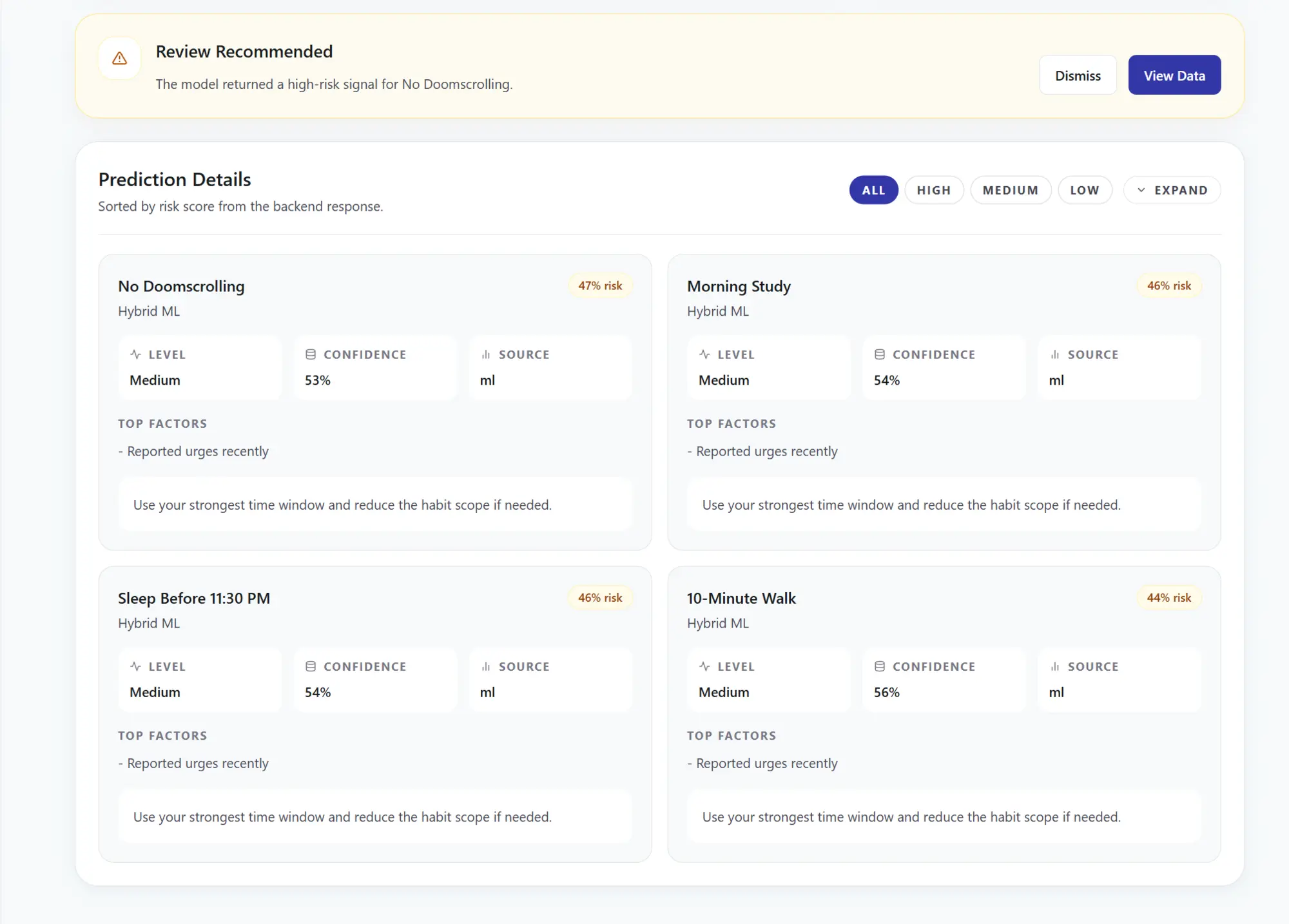
Calendar, streak, completion, and predictive views expose what is changing.
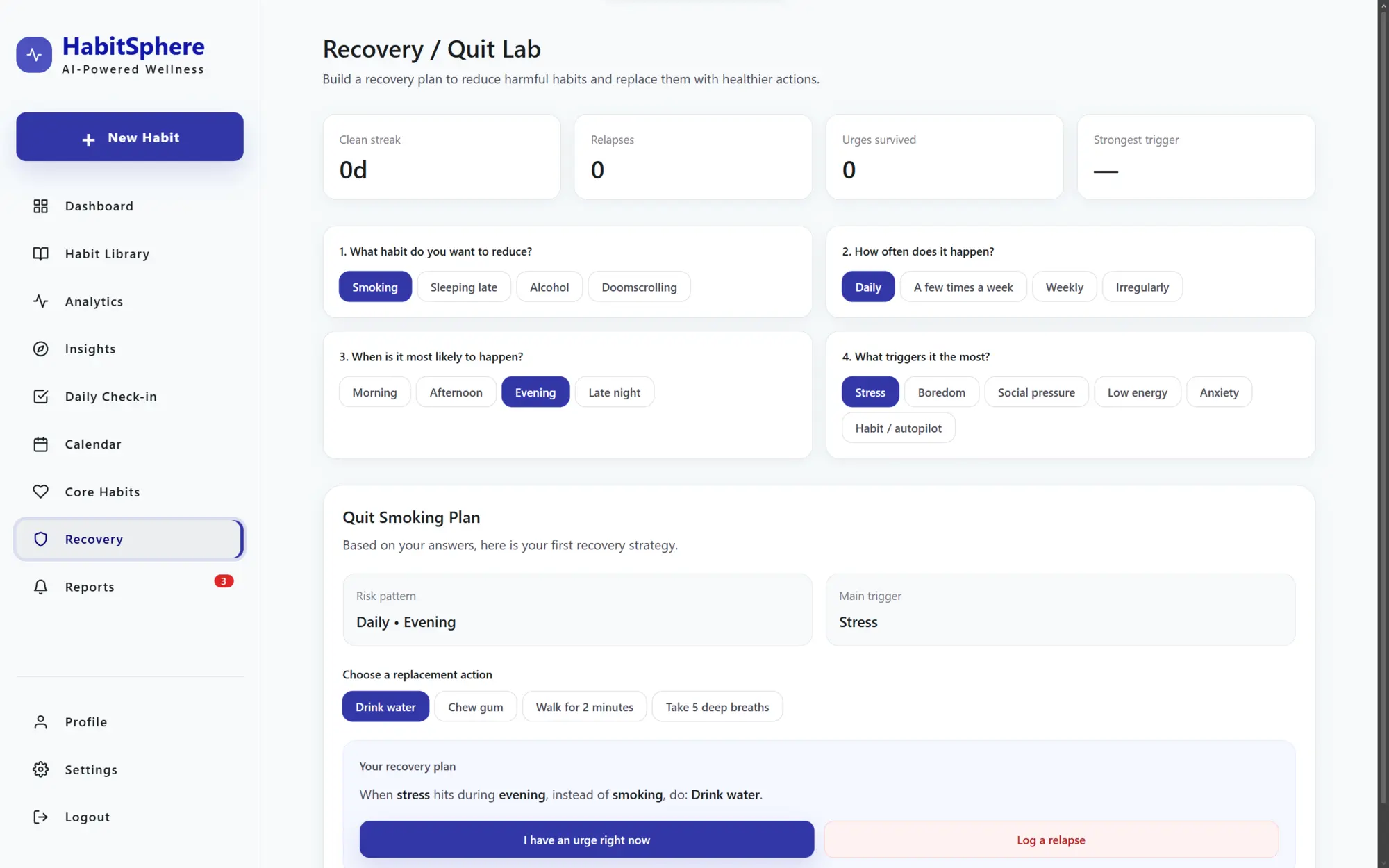
The product offers an explicit recovery path rather than relying on motivation copy.
Most habit products reward completion but do little with missed behavior, correlated patterns, or recovery. The difficult part is turning activity history into guidance without presenting weak signals as medical certainty.
I organized the experience into a daily action layer, a history layer, and an analysis layer. Predictions are shown with confidence and source context, while recovery plans remain explicit user decisions.
The user creates a habit with cadence, target, and context.
Simple check-ins build the behavioral history without making the dashboard heavy.
Calendar, streak, completion, and predictive views expose what is changing.
The product offers an explicit recovery path rather than relying on motivation copy.
The main dashboard keeps completion and logging immediate while deeper analysis lives one level away.
Risk states include confidence and source context so analysis does not masquerade as certainty.
Recovery flows help users restart or change a habit instead of turning a broken streak into a dead end.
Secondary screens that extend the core journey without diluting it.
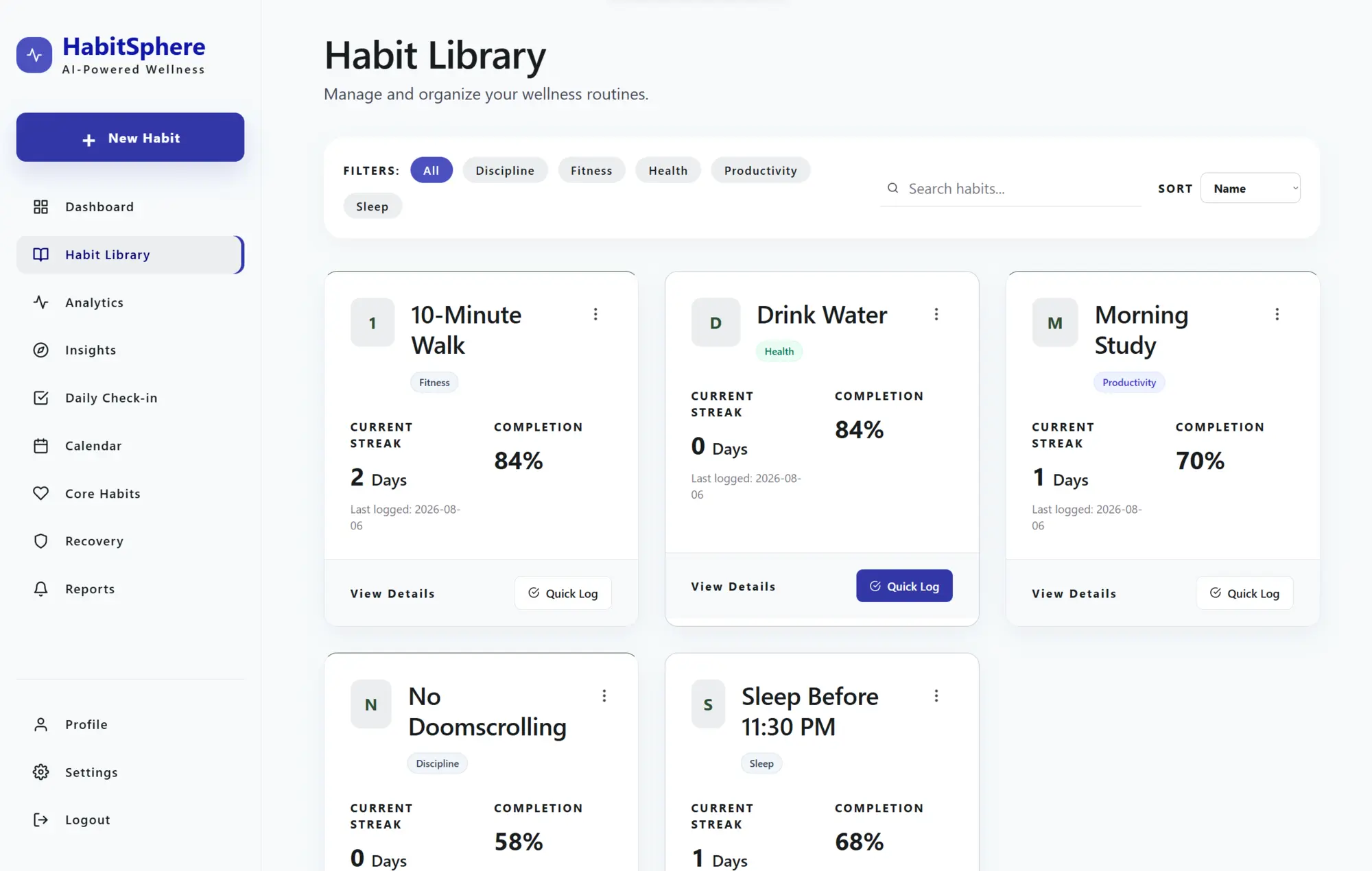
I designed the product structure, the responsive application shell, habit workflows, analytics views, calendar, recovery experience, and report surfaces shown in this prototype.
The prototype demonstrates daily tracking, habit creation, streak and completion views, calendar activity, detailed analytics, pending reminders, and recovery planning. Predictive insights are prototype behavior, not health advice.